Ferrara
M: Son of the CenturyFerrara is one of the book’s clearest settings for the transformation of postwar political conflict into organized control of both countryside and city. Socialist agricultural leagues first shape work, local elections, and provincial government; Fascist organizers then use coordinated violence, political alliances, and mass mobilization to dismantle those structures. The sequence makes Ferrara more than a backdrop: its fields, labor institutions, and Estense Castle become successive measures of who can command the province.
Setting and Agricultural Conflict
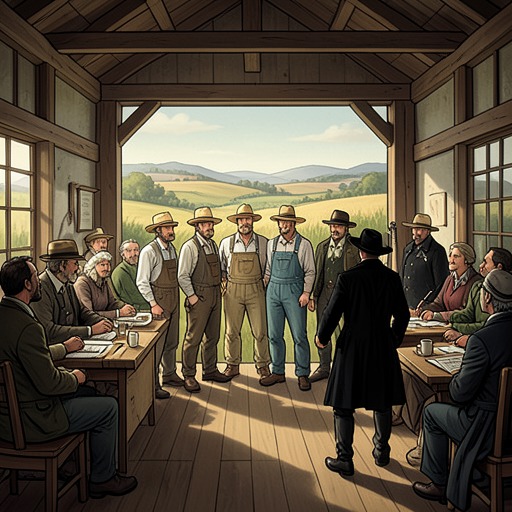
The conflict in Ferrara begins in a countryside where the socialist leagues wield substantial influence over agricultural labor. On February 24, seasonal farmworkers, supported by sharecroppers, strike for renewal of the collective farm agreement. The stoppage interrupts sowing of hemp and sugar beet, important crops for the provincial economy. The landowners eventually accept wage increases, worker-managed hiring centers, and a compulsory employment quota requiring them to hire five workers for every thirty hectares of arable land between November and April, when agricultural work is scarce.
The leagues’ authority rests on more than the ability to call a strike. They organize hiring and press landowners to follow agreed conditions; in the wider province, their reach extends into the management of work and crop decisions. Farmworkers have limited employment across the year, making access to wages during idle months a matter of survival. The result is a struggle over who can set the terms of rural life: landowners, tenants, or the organizations claiming to represent labor. The book shows how this conflict intensified into coercive enforcement and retaliation, sharpening the antagonism between organized farmworkers and those who resisted the leagues’ rules.
Socialist Control and the Castle
Ferrara’s political realignment becomes visible on November 3, 1920, when socialist victories in the local elections confirm the party’s hold over the province. In the Ferrara countryside, the workers’ party wins 10,185 votes, compared with 2,921 for all the other parties combined, and takes all 54 municipalities. The result turns the leagues’ social influence into an unmistakable electoral and administrative ascendancy.
The Estense Castle gives that change a striking public setting. A red flag flies from Saint Paul’s Tower, and a socialist message is painted on the castle wall. After the new council’s first meeting in the Games Salon, leaders of the farmers’ leagues and the Chamber of Labor hold a banquet in the Government Room. Their gathering takes place in rooms associated with the Este court, and the castle’s doorkeeper, Ghelandi, occupies the seat of honor once associated with the Renaissance prince. The banquet is both a celebration and a declaration: institutions and spaces that once displayed aristocratic authority now host representatives of organized labor. Yet the electoral triumph does not end the contest over power; it precedes the Fascist campaign to overturn it.
Fascist Organization and Escalation
By January 1921, Ferrara’s Fascist movement is divided over its direction and its ties to landowners. Olao Gaggioli, who had founded the local Fascio, resigns as its secretary in protest against Benito Mussolini’s break with Gabriele D’Annunzio and what he sees as agrarian interference. His absence from the next major expedition is consequential: a figure with deep roots in the local organization and its earlier actions has left as the movement aligns itself more closely with agrarian interests.
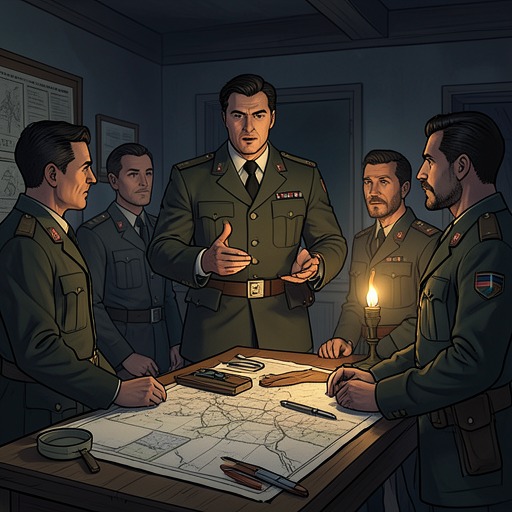
On January 23, a large, armed Fascist force leaves Ferrara for the surrounding villages. Its plan is organized on military lines: trucks supplied by the Agrarian Association carry men toward multiple targets, including the leagues at San Martino, Aguscello, Cona, Fossanova San Biagio, Denore, and Fossanova San Marco. The intended purpose is to destroy the local organizations that sustain the leagues’ influence. The operation brings together participants from different social backgrounds, including veterans and landowning families, under a coordinated campaign of political violence.
The spring offensive expands from village targets to the institutions that give socialist organization practical force. In April, the employment bureau at Jolanda is burned and its administration made to resign. After Fascist squad member Arturo Breviglieri is killed during a raid at Pontelagoscuro, his comrades occupy the town, burn its Chamber of Labor, and compel local socialists to perform a public gesture of submission. Other attacks follow, including the killing of Luigi Masin, treasurer of the Granzette Chamber of Labor, and the siege of Ferrara itself by about one hundred Fascists. In a matter of months, nine chambers of labor, a cooperative, and nineteen peasant leagues are destroyed in the province. The sequence reveals the practical mechanism of the transfer: local institutions are not simply outvoted but systematically disabled.
Mobilizing the Countryside
Fascist control in Ferrara also depends on attracting people who had recently belonged to socialist organizations. During Benito Mussolini’s visit, Italo Balbo receives him in a display attended by around 20,000 Fascists. Balbo’s campaign combines organized force with the promise of land redistribution, and socialist peasant leagues begin moving over to Fascist unions, beginning with the league at San Bartolomeo in Bosco. The book sets the scale of the crowd beside the movement’s continuing use of personal violence: Balbo walks beside Mussolini with a club and strikes an admirer who obstructs their path. Popular recruitment and coercion operate together rather than as alternatives.
That combination reaches its most spectacular form in May 1921. At midnight on May 11, organizers mobilize thousands from scattered farmhouses across the Ferrarese countryside. People travel on foot, by bicycle, in wagons, and on barges along the canals. By the following morning, 50,000 farm laborers have entered Ferrara. The city is paralyzed: Balbo orders telephone lines cut, school buildings requisitioned for lodging, and shops and businesses closed. The mass encampment surrounds the castle, while the prefect is confronted with an ultimatum demanding that the police return to their barracks and that the government guarantee public works.
The mobilization lasts forty-eight hours. The municipal kiln produces 45,000 pounds of bread, and negotiations continue until the government agrees to the demands. At dawn on May 14, Balbo orders the participants to demobilize. The outcome is presented as a complete victory for the Fascist organizers: Ferrara has been occupied without a conventional battle, and Balbo declares the city his. Benito Mussolini, watching the sudden change in allegiance from Milan, is both exhilarated and unsettled by how quickly former socialist farmworkers have become part of a Fascist mobilization.
Ferrara’s Political Significance
Ferrara’s course links several forms of power that might otherwise appear separate: control over hiring and agricultural production, electoral dominance, armed attacks on labor institutions, and the ability to assemble enormous crowds. The socialist victory of November 1920 and the destruction of leagues and labor chambers in the months that follow show how quickly electoral strength can be displaced when its organizational foundations are exposed to sustained violence. The May occupation then adds a further dimension: mass participation becomes a demonstration of power directed not only against socialist opponents but also against the state, which yields to the demand for public works.
The city’s spaces register those reversals. The Estense Castle first hosts a socialist celebration of political ascendancy; later it is surrounded by an encamped force assembled under Fascist direction. Across this arc, Ferrara becomes a model of how local political control was won through the combination of organization, promises, coercion, and pressure on public authorities. Its importance lies in the speed and completeness of that transformation, from the leagues’ command of rural life to Balbo’s claim that the city and province had passed into Fascist hands.